

Calendar File Generator
In this tutorial, we will learn how to generate ICS files so that users can add meetings directly to their calendars, on desktop, mobile devices, iOS or Android.
One powerful use of the calendar integration is letting live chat agents create appointments inside conversations. With the Calendar File Generator, the agent creates a meeting event that the user can add to their calendar. Here is how it works:
In the live chat conversation, locate the "Calendar File Generator" option at the bottom.
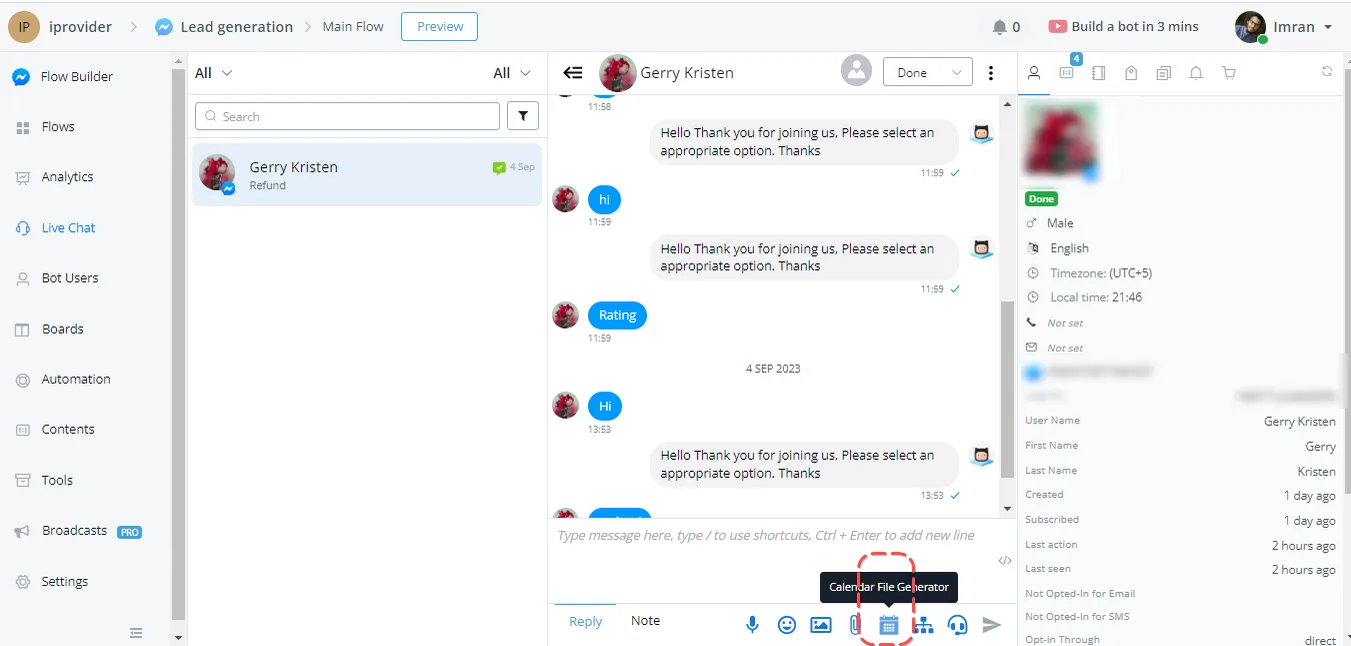
Click it to open a new window where you customize the meeting details.
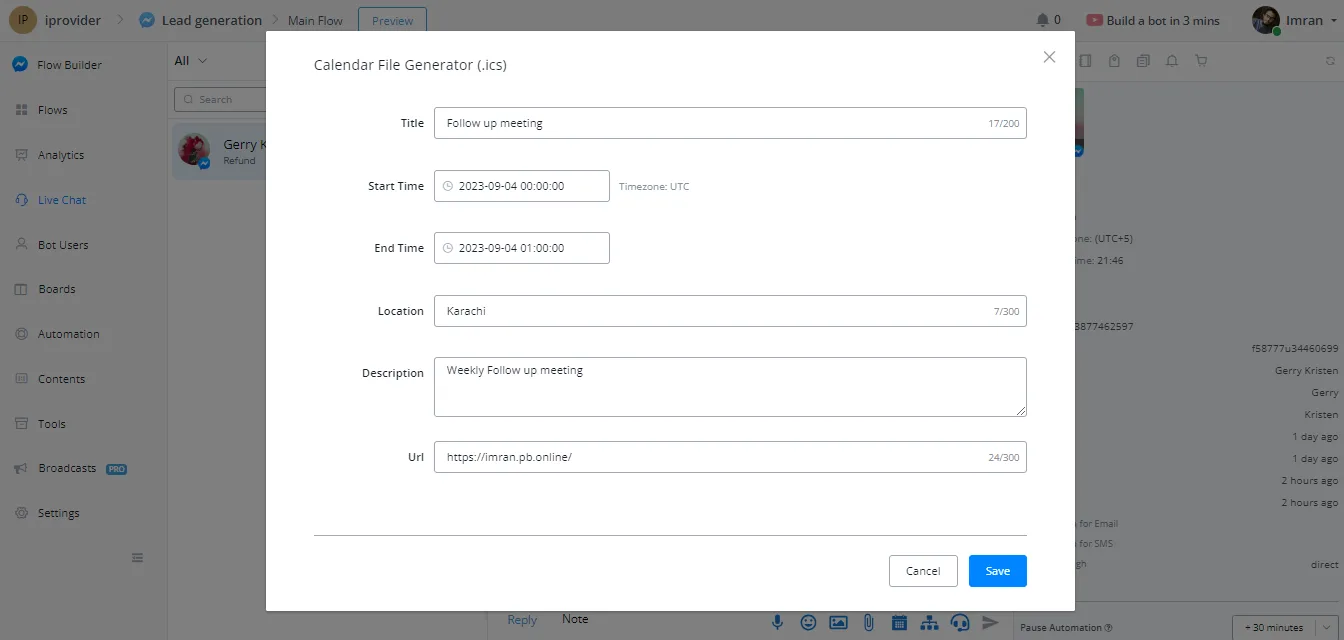
- Provide a name for the meeting, such as "Follow-up meeting"
- Set the start and end dates and times for the meeting.
- Specify the location, whether a physical address or a virtual meeting platform such as Zoom.
- Add a description, such as "Weekly follow-up meeting".
- Optionally, include a URL related to the meeting, such as your website.
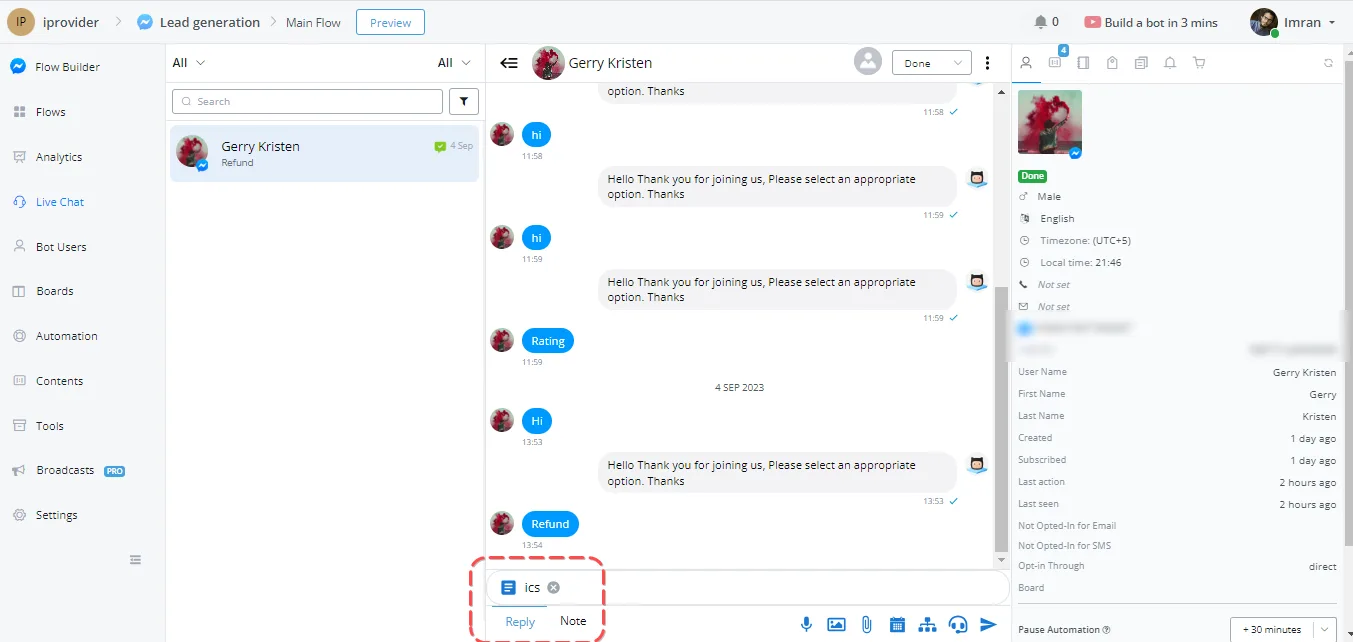
- Save the generated ICS file, which will appear in the lower-left corner of the live chat conversation.
When you are ready, send the file to the user, who can download it and add it to their calendar.
Once they receive the ICS file, the user can easily add the meeting to their calendars. Here is the step by step:
When the user opens the file, a browser tab displays an overview of the meeting details.
- They see the meeting information: name, date, time and description.
- To add the meeting to the calendar, they just click the "Add to Calendar" option.
- A prompt appears to choose a calendar application or service (Google Calendar, for example).
- Once the choice is made, the event is added to the calendar, and they gain access to all the details and can even set reminders.
The calendar integration is not limited to live chat conversations. You can also use it inside flows, to automate even further. Here is how to do it in a flow:
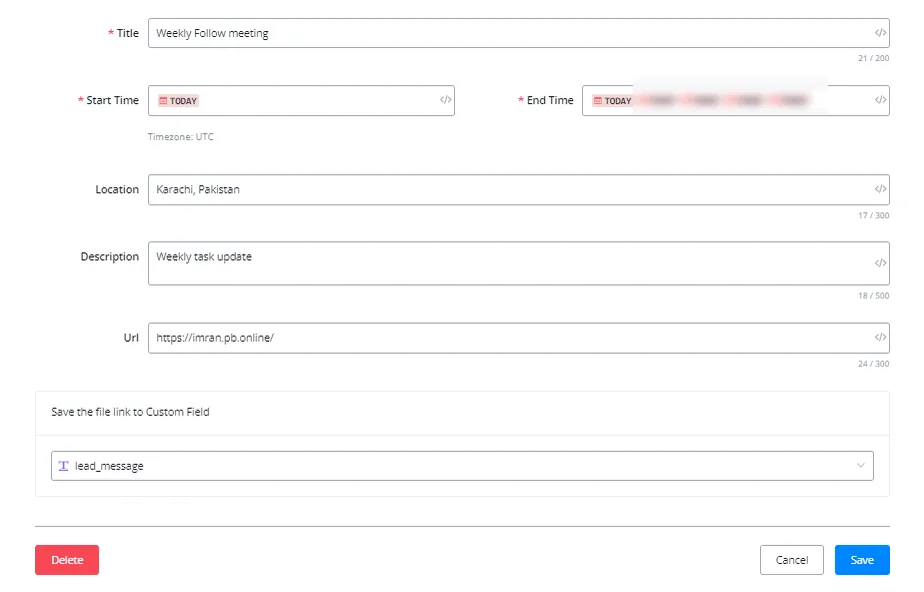
- In the flow, add an action block and select "Advanced Actions".
- Choose the "Calendar File Generator" option and edit the action.
- Customize the meeting details as needed, including dynamic variables for start and end times.
- Save the meeting link in a custom field for future use.
- Display the meeting link in a text block or use a button for easy access.
Send the link to users via SMS, email or any other communication channel you prefer.
When they click the link, users can add the meeting to their calendars, just like in the live chat scenario.